Product-specific load and fatigue evidence
Request relevant test methods, conditions, acceptance criteria and results for this exact part and application. A general FMVSS link or a listing load number does not substantiate a fatigue claim.

What we can help you buy on 1688
Last updated
Steering and suspension parts carry the vehicle and steer it. A failure here is not an inconvenience, and this is the category where we are most willing to tell you a supplier is not good enough.
The useful questions are about testing and materials, and they are answerable before you pay.
For auto suspension parts bought for resale, such as shock absorbers, control arms, ball joints and bushings, the supplier should be able to name the application, material and test evidence for each part number.
Request a quote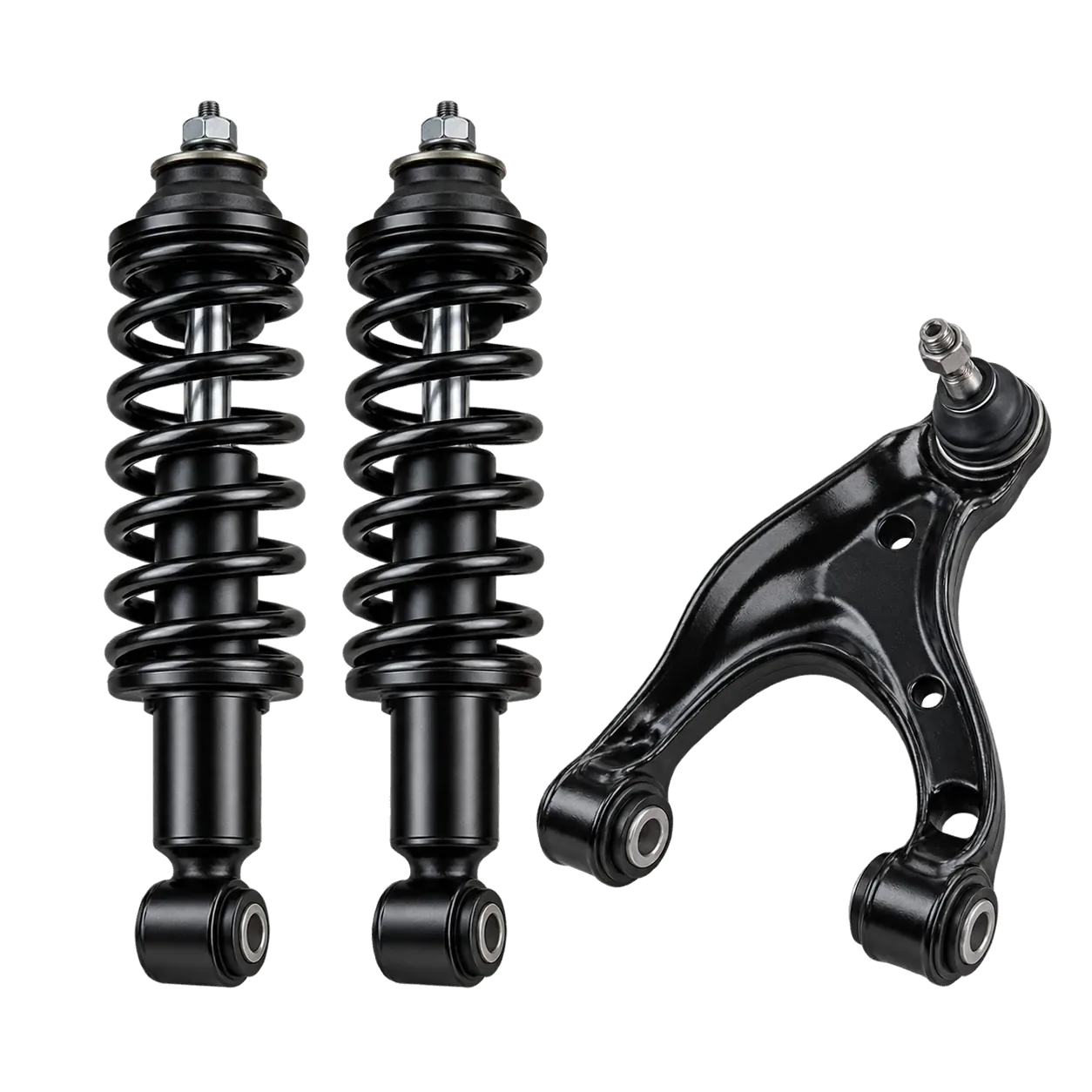
Request relevant test methods, conditions, acceptance criteria and results for this exact part and application. A general FMVSS link or a listing load number does not substantiate a fatigue claim.
The boot is what keeps grease in and water out, and it is the cheapest thing to downgrade. Material and whether the joint is greasable are both worth specifying.
Control arms come both ways at very different prices and strengths. We get the process and the alloy named rather than inferred from the photograph.
Compare the manufacturer application, damping/spring specification, dimensions and relevant test evidence. A sample fit or subjective ride alone does not establish suitability.
Confirm catalog application and relevant taper, thread, length and mounting geometry. Dimensional fit alone does not prove load capacity or safe function.
If a seller cannot produce material or test documentation for a steering part, we tell you and recommend against it rather than passing the risk on with a caveat.
Bring your product links, vehicle application and specifications to your sourcing request.
Request a quoteBuying notes
For used suspension parts entering Australia, resolve condition evidence and current parts-specific biosecurity assessment before accepting uncertain arrival costs.
Read articleTrace the fastening load-state requirement for an exact bushing to the completed-work record, without inventing a universal tightening position.
Read articleRecord oil location, wet packaging and handling history on newly delivered shocks without importing in-service weepage rules or wiping the evidence away.
Read article