
Fuel Module Handover: Upstream Contamination Scope
Link an in-tank module replacement to attributable upstream findings, related-work responsibility and any unresolved vehicle-specific recall enquiry.
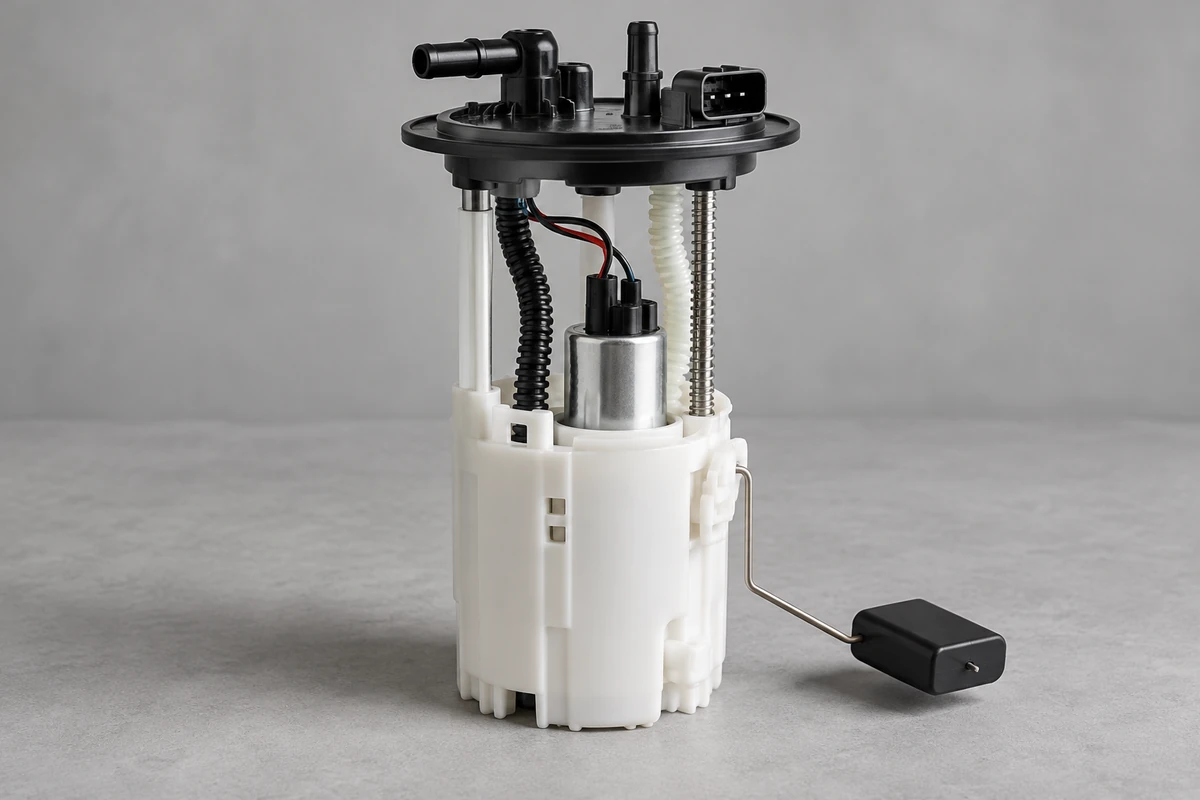
An in-tank fuel module can be the purchased replacement while a separate upstream problem remains outside the purchase order. The handover needs to preserve that dependency: what existing evidence identifies it, who owns the related assessment and what prevents the service job from being described as complete. Receiving the new module does not answer those questions.
This article coordinates an established service concern. It does not inspect a fuel system, prescribe component replacement, determine recall eligibility or give instructions for opening, draining or cleaning fuel-containing parts.
The Delphi example is narrowly identified
Delphi's FG1978 article links in-tank module failures with debris from an upstream high-pressure pump in its stated 2014–2019 DS RAM 1500 3.0 EcoDiesel scope. Checked on 14 October 2026, it also cites recall material. Those references are not a current decision about any actual VIN, destination or entitlement. Delphi FG1978 contamination article
The example supports one limited purchasing concern: a replacement order may address a downstream item without closing the separately identified upstream dependency. It cannot establish the source of debris in another vehicle or require the buyer to purchase an assumed list of additional parts.
Map the report to the component it actually describes
Retain the existing qualified report with its issuer, application and finding location. An observation attributed to the in-tank module should not be silently rewritten as proof of an upstream pump failure. If the report itself identifies that relationship, preserve the conclusion and any qualifications as the provider's statement.
Build a short dependency map in words: purchased module, reported upstream concern, related components whose disposition remains open, and the responsible provider for each question. Use the actual report's terms rather than inventing a system diagram or a repair plan.
Where two providers are involved, ask whether the second has received and reviewed the first provider's finding. Sending a new module to the second workshop without the attributable dependency can make an unresolved job appear to be an isolated parts change. Merely forwarding the report is also insufficient if nobody has accepted the resulting work scope.
Separate recall enquiry from repair authorization
If the actual case calls for a recall check, assign that enquiry through the current official vehicle-manufacturer or authorized service route for the destination market. Record who made the enquiry, which vehicle it covered and the attributable response. This article does not supply eligibility rules or interpret a historical notice as an active entitlement.
Keep the possible recall route separate from approval of paid work. A pending enquiry is neither a promise of free work nor authorization to order related components. Conversely, a commercial quotation does not establish that the recall question has been resolved. The owner of each decision should see which other answer is still awaited.
A component-dependency worksheet
| Field | Evidence to retain | Boundary to preserve |
|---|---|---|
| Exact application | Actual vehicle and module record | Broad model years do not decide a VIN enquiry |
| Module purchase | Identified supplied item and agreed scope | Parts delivery does not close the service job |
| Upstream finding | Attributable report and its stated relationship | Suspicion is not a confirmed component diagnosis |
| Recall enquiry | Official response for the actual vehicle and market | Historical article is background only |
| Related disposition | Provider-owned decisions still required | No automatic additional-parts list |
| Closure dependency | Specific unresolved question and owner | Document receipt is not technical release |
Use the worksheet only to map existing evidence and accepted responsibility. Do not request ordinary receiving staff to produce fresh fuel-system observations to populate an empty cell.
Fictional case: a module-only quotation
A fictional workshop report R identifies an upstream contamination concern and leaves the disposition of related components unresolved. The buyer obtains a price for replacement module M alone. A second provider's booking confirmation repeats the module reference but does not mention R. These are invented records, not a diagnosis or an actual recall case.
The buyer asks the second provider whether it has reviewed R and what related scope it is proposing. The module-only price remains the price of that supplied item. It should not be presented as the complete cost of resolving the reported dependency, and the buyer should not fill the gap with guessed component prices.
Suppose the provider then proposes a qualified assessment and the vehicle owner starts an official recall enquiry. The buyer records both paths and the decisions each awaits. It does not cancel one as unnecessary simply because the other exists. Actual scope, authorization and any entitlement must come from their respective responsible parties.
If an official response later addresses the vehicle, retain its exact scope. A reply about one identified concern does not automatically determine every related component's condition. The final service owner still needs an attributable disposition for the open job questions.
Hand over a dependency that can be followed
The recipient should be able to trace the new module to the existing report, the upstream question and the owner of any related work. Keep unsupported conclusions visibly unresolved. A full parts packet can coexist with an incomplete service decision; the coordinator's task is to make that difference clear, not to approve repairs.
Keep the purchasing enquiry focused
For category context, see Engine parts. In an Autoparts sourcing request, identify the actual part and the unresolved handover question. The form supports an 8–1200-character description or a supported marketplace HTTPS link, and up to five PNG, JPEG, WebP or GIF images, limited to 10 MiB each and 20 MiB combined. PDF, CAD and ZIP files need a separately agreed, authorized exchange.
Independent aftermarket or unbranded buying coordination and supplier negotiation do not establish service-provider capability, fitment, engineering approval or a ready-for-use vehicle. Named manufacturers above are documentary examples, with no affiliation or branded-goods offer implied.
Frequently asked questions
Does a failed in-tank module prove an upstream pump caused it?
No. The Delphi example concerns a named application and cannot diagnose another vehicle. Preserve actual qualified findings and their stated scope. If the relationship is only suspected, record it as a question for the responsible provider.
Does the cited recall reference establish current eligibility?
No. Assign a current enquiry for the actual vehicle and destination market through the official manufacturer or authorized service route. Retain that response separately from the article and from any commercial repair proposal.
Should every module order include the same related components?
The handover creates no universal parts list. Related-work decisions must follow actual application-specific evidence and qualified scope. A module-only quotation can be accurate while still leaving the overall job’s required work and cost unresolved.
What should the second workshop receive?
Send the established module and vehicle references, attributable upstream findings, open related-component dispositions and the status of any official enquiry through an authorized exchange. Ask which responsibilities the workshop accepts rather than assuming that receipt of the parts includes them.
Sources
Discuss a sourcing request related to this article.Fuel Module Handover: Upstream Contamination Scope