
A/C assemblies to Great Britain: distinguish HFC charge from holding gas
For A/C assemblies entering Great Britain, establish the actual gas or holding charge and importer context before relying on an HFC-related cost assumption.
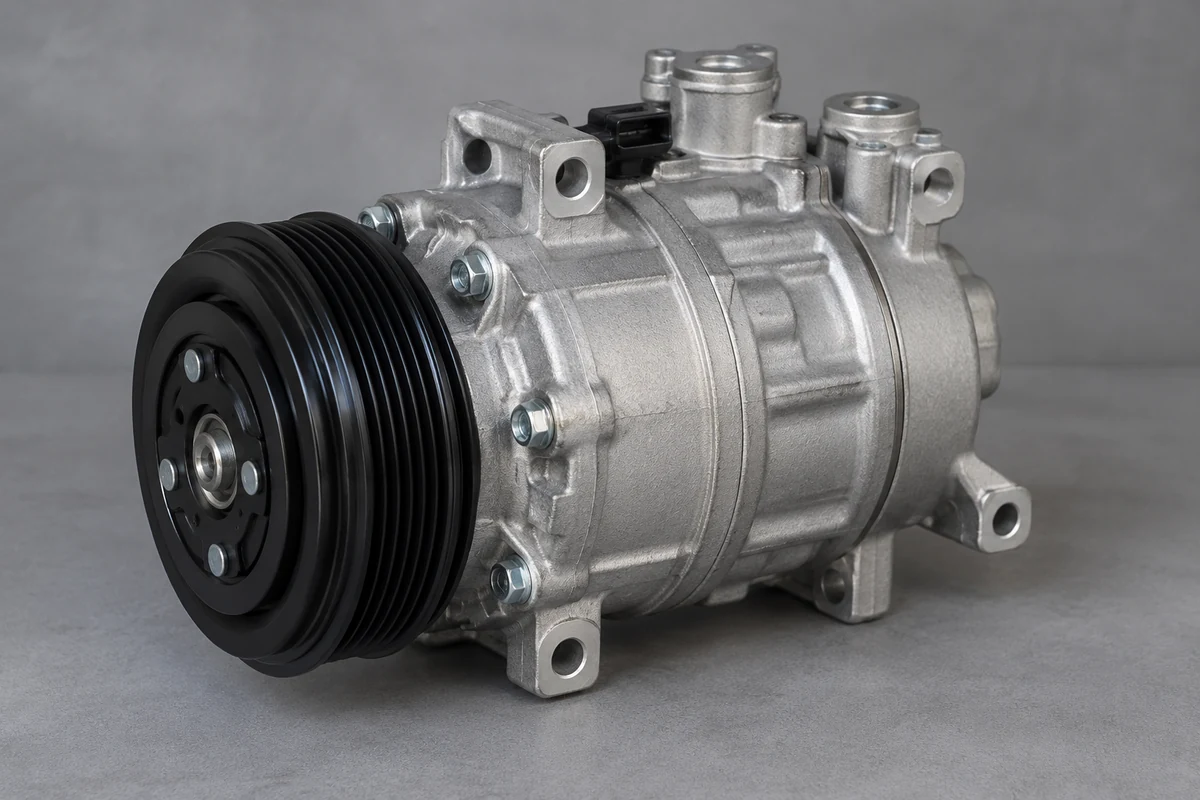
An A/C assembly described as “empty” can leave its Great Britain import-cost assessment incomplete. Ask what the actual supplied configuration contains: oil, refrigerant, a holding gas or another documented condition. Then have the responsible qualified adviser assess the relevant obligations for the actual importer and its annual context.
This is a purchasing enquiry for England, Scotland and Wales. It does not establish the position for Northern Ireland or the EU, determine transport classification, or provide charging, venting or gas-removal instructions.
Define what the supplier means by empty
Request the exact assembly reference and a product-specific supplied-state statement. Keep oil information separate from gas identity and quantity evidence. A compressor oil record cannot, by itself, answer whether the assembly contains HFC refrigerant.
Ask the supplier to identify the evidence supporting its description, including the issuer and the actual configuration covered. A sales message that says “no refrigerant invoice” is not the same as an attributable statement about the contents. Do not infer a gas from the type of equipment or its intended service application.
If the documents conflict, preserve both and request clarification. The buyer should not ask warehouse staff to open ports or release anything to settle a paperwork question. Any necessary technical determination belongs with qualified personnel under the applicable requirements.
Use the Great Britain distinction accurately
The Environment Agency and Defra guidance distinguishes HFC-pre-charged equipment from equipment empty of HFCs but containing a holding charge, such as nitrogen. It also makes annual importer quantities relevant to specified obligations and separately addresses labelling and product bans. A quota-related exception is not a blanket waiver of every requirement. GB pre-charged equipment guidance
Ask the adviser whether the actual assembly and contents fall within the relevant provisions, which obligations apply and what evidence is needed. Keep this assessment tied to Great Britain. A conclusion for another jurisdiction or another equipment configuration should remain separate.
No threshold calculation is supplied here. The buyer needs a qualified assessment based on the real gas, documented quantity, equipment scope and importer facts, not a guessed conversion or a conclusion drawn from one small order.
Identify the importer and annual context
State who will be the actual importer and who can provide its relevant annual records. If several orders are being considered, give the adviser the complete context it requests. The seller's order quantity alone may not answer an importer-level question.
Keep commercially sensitive records within the authorized professional exchange. The supplier may need to explain the assembly's contents without receiving the importer's whole purchasing history. Have the responsible adviser identify the information needed from each party rather than broadcasting unrelated records.
Request an assessment that distinguishes applicability, required actions, outstanding evidence and actual quoted professional or other costs. Do not invent a standard HFC fee or treat an open obligation as zero. Ask the adviser what changes would require the assessment to be reopened.
| A/C import field | Evidence or responsible answer |
|---|---|
| Assembly identity | Exact supplied configuration and reference |
| Gas identity | Attributable refrigerant or holding-gas statement |
| Charge evidence | Product-specific quantity and supplied-state records |
| Annual context | Relevant importer information for qualified review |
| GB obligations | Assessment of each applicable requirement |
| Decision owner | Person resolving gaps before the dependent commitment |
Fictional comparison: an oil sheet used as the whole answer
A fictional seller sends an oil-fill sheet for an A/C assembly and calls the goods empty because no service-refrigerant charge appears on the invoice. The buyer's import estimate assumes no HFC-related review is needed. The actual gas record has not been reconciled.
The buyer separates the oil record from the contents question and requests the relevant gas evidence. The adviser receives that record and the actual importer context. Until then, the proposed cost treatment remains unresolved. The example establishes no contents, exemption or import permission.
If the seller later offers a different supplied configuration, record it as an alternative requiring its own technical, transport and import review. Do not request removal of gas merely to fit a desired budget assumption. The useful result is an accurate description connected to the appropriate GB assessment and actual commercial terms.
The primary guidance cited here was checked on 14 October 2026. Recheck the applicable current rules and provider terms before committing to the actual shipment.
Keep the buying enquiry within scope
For product context, see Cooling parts. The Autoparts sourcing request can start an independent aftermarket or unbranded buying enquiry with a short description or supported product link. It accepts up to five PNG, JPEG, WebP or GIF images, at most 10 MiB each and 20 MiB total; descriptions are 8–1200 characters. Arrange other documents through a separately agreed, authorized exchange. The form is not a PDF, CAD or ZIP portal.
Supplier information and negotiation do not establish product suitability, specialist transport acceptance or customs approval. Keep those decisions with the responsible qualified parties. No freight service, branded-product offer or guaranteed outcome is implied here.
Frequently asked questions
Does an oil-filled compressor record prove which refrigerant is present?
No. Keep oil and gas records separate and request an attributable supplied-state statement for the actual assembly. Do not infer refrigerant identity from the oil documentation.
Is equipment with a holding charge the same as HFC-pre-charged equipment?
The cited GB guidance distinguishes those circumstances. Have the qualified adviser assess the actual gas and configuration; the word empty alone is insufficient.
Does a quota exception remove every F-gas requirement?
Do not assume so. The guidance addresses labelling and product restrictions separately. Ask the adviser to identify all applicable obligations for the actual equipment and importer.
Can I use this Great Britain assessment for Northern Ireland?
This article covers England, Scotland and Wales. Northern Ireland and EU movements need their own explicit assessment rather than an automatic transfer of the GB conclusion.
Sources
Discuss a sourcing request related to this article.A/C assemblies to Great Britain: distinguish HFC charge from holding gas