
Starter batteries: verify the non-spillable claim for the actual route
Check the exact lead-acid starter battery, model-specific non-spillable evidence and actual route before relying on an ordinary-cargo freight offer.
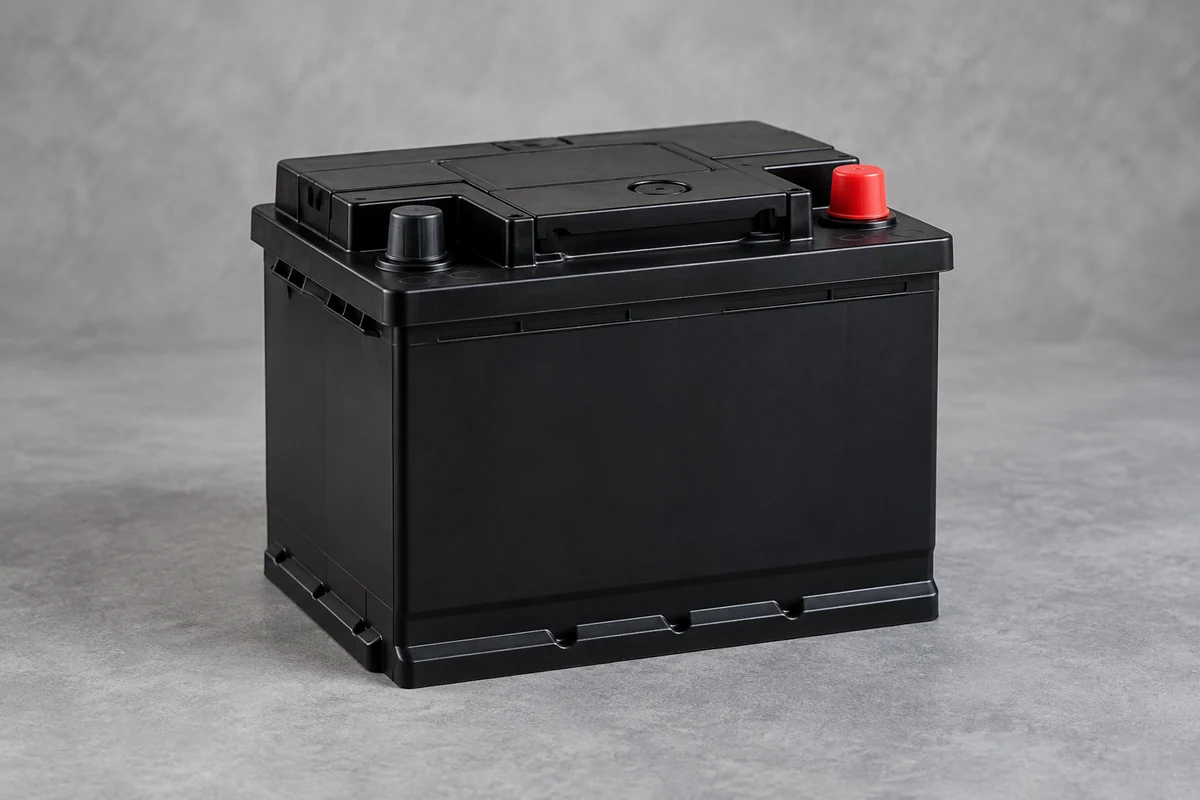
For a lead-acid starter battery, “sealed” on a sales listing is not the complete basis for a non-spillable freight quote. Ask the qualified provider to assess the exact model, supporting evidence and actual route. An unrelated lithium-battery document or a domestic-service explanation cannot close those questions.
The purchasing decision is whether the claimed transport treatment has an applicable evidence trail. This article does not determine an exemption, give a UN number or explain battery preparation. Product suitability and transport acceptance remain separate responsibilities.
Establish chemistry before reviewing the claim
Request the manufacturer or responsible supplier's exact chemistry and model identification. Retain the product reference, existing specification and attributable condition record. Do not infer chemistry solely from an external case shape, a vehicle application or a seller's generic “car battery” description.
If the offer is specifically for a lead-acid starter battery, keep that fact visible on the review cover sheet. A document for another chemistry may be genuine yet irrelevant to the question being asked. Ask the supplier why it was supplied instead of marking the evidence folder complete because it contains a recognizable test heading.
Condition belongs in the same enquiry. Tell the provider if the goods are new, returned, of uncertain history or known to have a concern. Do not have ordinary receiving staff perform a test to make the record appear more certain.
Require evidence tied to the non-spillable statement
UPS's US screening page describes non-spillable batteries in terms of tested, proven status and explicitly frames that discussion within the United States. It does not make every battery marketed as sealed eligible for a China-origin service. UPS battery screening guidance
Ask the specialist which evidence substantiates the claim for the actual model and movement. Record the issuer, model covered and document revision, then retain the provider's assessment of that evidence. Purchasing should neither invent a missing test result nor decide that a related model is equivalent without the responsible assessment.
A lithium-focused report supplied for a lead-acid proposal is a specific evidence mismatch. It may answer a different question about different goods. Return to the exact chemistry and model rather than collecting more unrelated certificates. The objective is applicability, not attachment count.
Check the whole movement, not one domestic leg
List the actual origin, destination and proposed services, including any change between international carriage and onward domestic delivery. Ask the provider which conclusion applies to each part of its offered scope. A domestic answer should not be silently extended to the international movement.
UPS's hazardous-materials agreement page describes US domestic and US-origin international scope, alongside regulatory and carrier requirements. It is not authorization for shipment from China. UPS service agreement scope
Have the actual quoting provider confirm its route-specific conclusion and outstanding conditions. If the answer depends on additional specialist work, obtain its assessed scope and actual price separately. Do not insert a standard battery surcharge or promise a normal parcel timeline.
Starter-battery evidence worksheet
| Question | Record to keep |
|---|---|
| What chemistry is offered? | Manufacturer/supplier statement for this model |
| Which exact battery? | Model and attributable condition record |
| What supports non-spillable status? | Applicable evidence and issuer |
| Does the evidence match? | Specialist response to any chemistry/model mismatch |
| Which movement is reviewed? | Origin, destination and named service scope |
| What conclusion supports the quote? | Provider answer, conditions and remaining gaps |
Fictional comparison: a familiar but wrong report
A fictional buyer requests a lead-acid starter battery. The seller advertises it as sealed and attaches a lithium-battery report from another product range. A freight estimate assumes ordinary cargo, but the provider has not reconciled the documents.
The buyer identifies the chemistry and model mismatch and asks for applicable evidence. It sends the corrected record, when available, to the qualified provider for the actual international route. Until that response arrives, the ordinary-cargo price remains conditional.
If a provider confirms a domestic treatment only, record that limit. The unresolved international leg still prevents a complete delivered-cost comparison. If the seller substitutes a different battery, reopen the affected evidence and quotation rather than transferring the earlier answer. The final buying decision should rely on a matched record and attributable provider conclusion, with no buyer-authored exemption.
The primary guidance cited here was checked on 14 October 2026. Recheck the applicable current rules and provider terms before committing to the actual shipment.
Keep the buying enquiry within scope
For product context, see Engine parts. The Autoparts sourcing request can start an independent aftermarket or unbranded buying enquiry with a short description or supported product link. It accepts up to five PNG, JPEG, WebP or GIF images, at most 10 MiB each and 20 MiB total; descriptions are 8–1200 characters. Arrange other documents through a separately agreed, authorized exchange. The form is not a PDF, CAD or ZIP portal.
Supplier information and negotiation do not establish product suitability, specialist transport acceptance or customs approval. Keep those decisions with the responsible qualified parties. No freight service, branded-product offer or guaranteed outcome is implied here.
Frequently asked questions
Does sealed mean a starter battery is non-spillable for shipping?
Do not infer the transport conclusion from marketing language. Ask the qualified provider which model-specific evidence is needed and whether it supports the proposed treatment on the actual route.
Can a lithium test report support a lead-acid battery quote?
A report for another chemistry does not answer this lead-acid model’s evidence question. Resolve the mismatch with the supplier and specialist instead of treating the presence of a report as acceptance.
Can a US domestic non-spillable explanation be used for export from China?
It does not establish that international movement’s requirements. Ask the provider responsible for the actual origin, destination and service to assess the applicable evidence and conditions.
What should happen if the supplier changes the starter-battery model?
Update the chemistry, model, condition and evidence record, then have the provider reassess the affected quote. The old conclusion should not be transferred solely because the replacement looks similar.
Sources
Discuss a sourcing request related to this article.Starter batteries: verify the non-spillable claim for the actual route