
Reconcile Compressor Oil Records Before Opening the Delivered Unit
Reconcile a delivered compressor’s identity, oil type and declared quantity basis while preserving closures and keeping missing records separate from physical diagnosis.
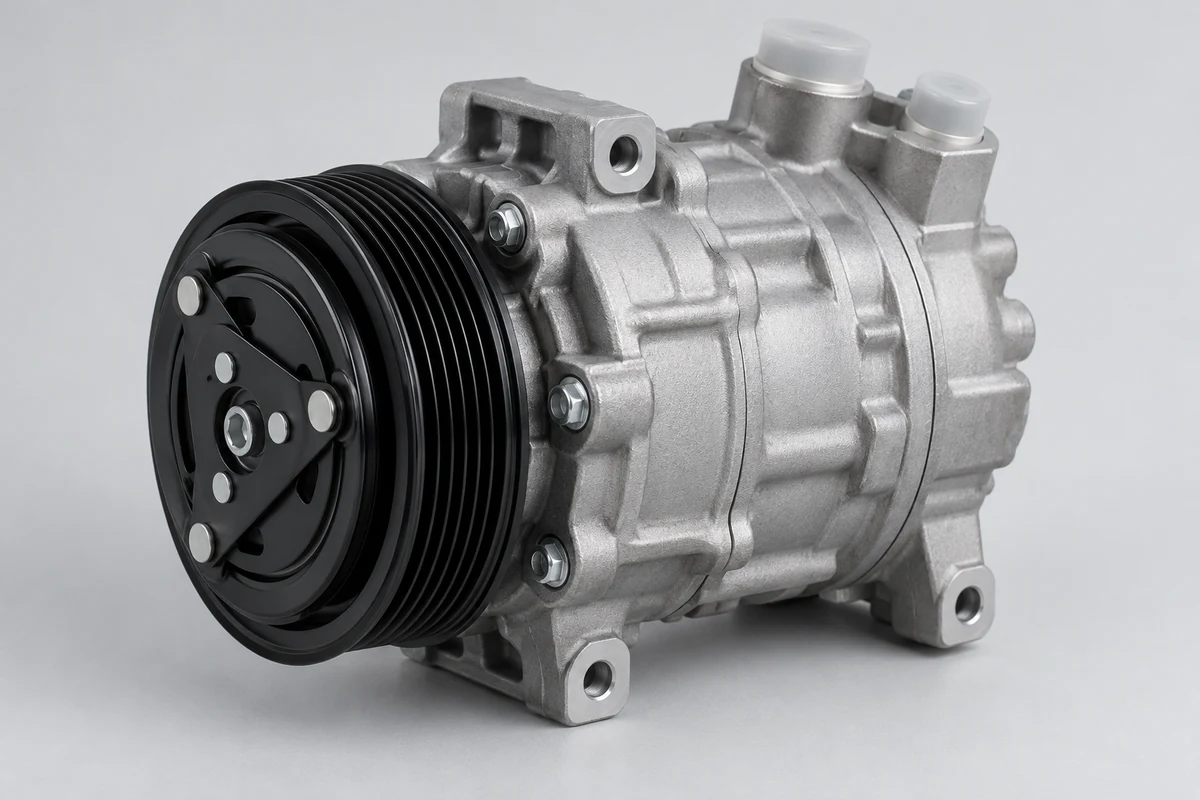
A delivered A/C compressor marked “oil included” may still lack the fill information the order required. Keep the compressor closed while reconciling its exact identity, declared oil type and quantity basis with the approved supply record. Draining the unit to find an answer is a different activity, not a substitute for missing shipment documentation.
This receiving decision starts after the required compressor and documentation have been agreed. It does not select an oil, calculate a system charge or define installation work. Its purpose is to distinguish a missing record from a known departure without changing the delivered contents.
Read presence, type and quantity basis as separate answers
A fill declaration should tell the buyer what the supplier claims for the actual delivered compressor. “Oil included” states presence in general terms. It does not identify the oil specification, the stated amount or whether that amount is described for the compressor alone, a system basis or some other documented supply condition.
Retain the original wording where the quantity basis is ambiguous. Do not silently normalize a vague number into system quantity or infer a unit of measure from another model. Ask for a corrected, attributable record tied to the delivered reference and serial or lot where available.
DENSO’s product FAQ says its aftermarket compressors are prefilled with the correct oil type and quantity for the entire A/C system. The same page identifies compressor designs without a drain plug. These are statements about DENSO’s named range, not evidence of another supplier’s fill. They illustrate why the scope of a fill declaration matters and why a buyer should not assume that opening or draining is a universal receiving step. DENSO compressor FAQ
Reconcile the paperwork before interpreting the hardware
Put the approved fill-document requirement beside the shipment declaration and actual product marking. Record whether the document identifies this model and revision. A certificate or sheet for a broad compressor family may not answer a record required for the specific delivered configuration.
Separate three statuses: information supplied and traceable, information absent, and an explicit contradiction. A blank type field is missing evidence. A declared type that conflicts with the approved record is a documented discrepancy requiring review. These statuses deserve different questions; neither should be repaired by assuming the intended answer.
If two documents disagree, preserve both with their dates and issuing sources. Ask the authorized requirement owner which requirement governs and the supplier which declaration applies to the shipment. Do not overwrite the earlier record simply because a newer sales message appears more convenient.
Record supplied closures without opening ports
Note the visible state of caps or other closures supplied with the actual compressor. Compare it with the agreed product and packaging information rather than inventing one closure requirement for all compressors. An accessible image can record a cap that appears loose or absent; it cannot establish the fill inside.
Do not open a port, remove a plug, drain liquid, flush the unit or perform charging work to resolve a documentation question. This includes any electrically driven or high-voltage compressor work. The buyer needs an attributable supplied-state record and a responsible disposition, not a warehouse experiment.
Keep closure concerns separate from fill-record concerns. A complete declaration cannot erase an open-port observation, and an intact-looking closure cannot fill a blank oil-type field. If either requires a hold under the agreed process, give it its own issue reference so a reply to one does not close both accidentally.
A delivered-fill reconciliation worksheet
This original editorial worksheet is for records, not for selecting or measuring oil.
| Record | Approved basis | Delivered evidence or gap |
|---|---|---|
| Compressor identity | Exact model/revision and relevant application record | Actual marking and shipment-unit link |
| Fill declaration | Required supplied condition | Attributable statement covering this unit or lot |
| Oil type | Authorized specification reference | Declared type, missing field or explicit conflict |
| Quantity basis | Required meaning and units | Actual wording, not an inferred system amount |
| Supplied closures | Applicable product/packing record | Accessible cap or closure observation |
| Disposition | Required reviewer and documentary gate | Corrected record, qualified response or continued hold |
Add the document reference to each completed row. “Confirmed by supplier” without the underlying reply is difficult to reconcile later, especially if a replacement compressor is supplied under a different configuration.
Fictional counterexample: “included” leaves two fields open
Imagine a fictional compressor C-8 whose order requires a traceable fill declaration identifying type and quantity basis. The shipment note says only “oil included,” while both required fields are blank. Its supplied closures show no visible concern in the accessible views. All details are invented.
The buyer records a documentary hold rather than a finding that the compressor contains the wrong oil. The next request asks for the missing declaration tied to C-8’s actual identity. No oil is drained to establish a number, and DENSO’s statement about its own range is not copied into the unknown supplier’s record.
Suppose a supplier then sends a complete sheet for a different compressor model. The fields are populated but the identity link is still wrong. C-8 remains unresolved. If a corrected sheet covers C-8 and the responsible reviewer reconciles it with the agreed requirement, that can close the documentary issue within its stated scope. It does not prove the physical contents by observation or authorize installation.
A later commercial credit also would not answer the fill question. Record settlement terms separately from whether the required supplied-state evidence has been established.
Close a record gap without inventing a service plan
Request a coherent, shipment-specific answer that preserves the original requirement and identifies any declared departure. If the supplier cannot substantiate the supplied condition, ask for an appropriate replacement, return or qualified disposition proposal under the actual agreement. Do not improvise an oil adjustment to make the paperwork appear complete.
Keep the buying request tied to the actual part
For category context, see Cooling parts; the supplier-check guide covers the earlier supplier review. Independent aftermarket or unbranded sourcing and authorized drawing-based proposals require their own product evidence. The manufacturer cited here is a documentary example, not an affiliation, branded-goods offer or endorsement of another supplier.
Start an Autoparts sourcing request with the exact received reference and the unresolved question. The form accepts an 8–1200-character description and up to five PNG, JPEG, WebP or GIF images, at most 10 MiB each and 20 MiB total. PDF, CAD and ZIP uploads are not supported. Arrange other technical files through a separately agreed, authorized exchange. Buying coordination and supplier negotiation do not establish an owned laboratory, an inspection service, engineering approval or a guaranteed remedy.
Frequently asked questions
Does “oil included” establish the correct compressor fill?
It does not identify type or quantity basis unless the applicable record defines those terms. Compare the actual declaration with the order’s required evidence. Missing information should remain a documentary gap rather than being filled from another manufacturer’s catalogue.
Can the receiver drain the compressor to measure its contents?
That is outside this receiving method. Keep supplied closures in place and request a traceable declaration or qualified disposition. Draining changes the contents and does not replace the need for the correct product-specific records and technical responsibility.
What if the oil sheet is complete but names another model?
The identity link remains unresolved. Ask for the document covering the actual received compressor and preserve the mismatched sheet as part of the correspondence. Complete-looking fields do not make evidence applicable to a different unit.
Do intact caps close the oil-documentation question?
No. Closure appearance and fill documentation answer separate questions. An intact-looking cap does not reveal oil type or quantity; a corrected fill declaration likewise cannot erase a separately observed missing or loose closure.
Sources
Discuss a sourcing request related to this article.Reconcile Compressor Oil Records Before Opening the Delivered Unit