
Programmable TPMS: Count Supported Stock Coverage
Separate boxed programmable TPMS sensors from stock with documented application, stem and current programming-support coverage.
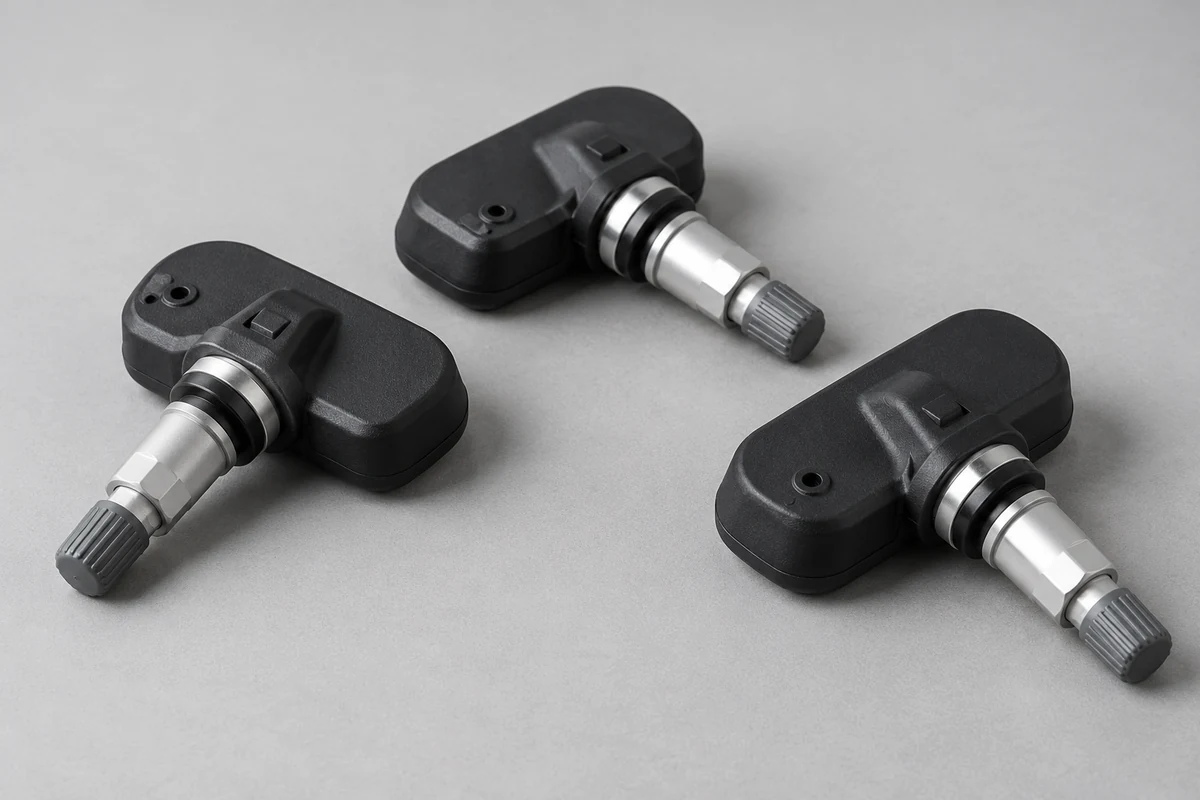
A box count of programmable TPMS sensors does not tell a buyer how many pending applications it can cover. Replenishment needs a supported allocation for each application, using the exact sensor reference, approved stem option and the service provider's current programming-support evidence.
The outcome is a coverage record, not a programming procedure. A purchasing worksheet cannot establish vehicle compatibility or authorize physical installation, sensor programming or relearn work.
Broad frequency coverage is not a vehicle list
Schrader's EZ-sensor GO page describes combined 314.9, 315 and 433 MHz applications and different valve-stem options. It identifies 33560 as a rubber snap-in version and supplies separate information for another clamp-in reference. Reopened on 14 October 2026, these are named product descriptions rather than proof that every application is supported. Schrader EZ-sensor GO
Do not translate “programmable” into “ready for any booked vehicle.” Frequency is one product attribute, while the actual application and applicable support record must still be established. A statement about broad tool compatibility is not evidence that the buyer's particular provider has the needed current support.
Keep the complete sensor and stem references. Similar packaging or membership in one product family should not collapse distinct supplied configurations into one interchangeable inventory line.
Ask for evidence covering the pending application
For each authorized requirement, retain the application reference already established by the responsible service owner. Ask that owner or the applicable product/tool provider to confirm the sensor configuration and current support basis. Record the source and checked date without supplying programming steps.
The answer should distinguish supported now, expressly outside the evidence scope, and unresolved. An unanswered row is not proof that the product cannot work; it is insufficient support for counting that stock against this obligation. Conversely, a favorable answer for one application should not be copied across the rest of the queue.
If a stem option is separately required, show whether that exact approved supply is present or confirmed in the offer. A sensor body's availability cannot stand in for the whole accepted supplied configuration. Do not assume stems can be swapped or salvaged to close a purchasing gap.
Allocate the supported pool once
A versatile sensor may be eligible for more than one application, but one physical unit covers only one sensor obligation at a time. Keep the approval map distinct from the allocation map: the first says where a unit may be considered; the second says which requirement actually receives it.
Do not count the full box independently against every supported application. Where several jobs compete for the same stock, have the authorized planning owner choose the allocation and retain the dates. A future support update remains an unresolved possibility until actually confirmed for the relevant need.
| Field | Evidence to retain |
|---|---|
| Pending application | Approved job reference and required sensor quantity |
| Sensor reference | Exact boxed SKU and traceable stock population |
| Stem option | Accepted configuration and matching supply status |
| Current support evidence | Applicable provider record, date and scope |
| Allocated units | Stock assigned once to identified obligations |
| Unresolved coverage | Missing application, stem or support answer and owner |
Fictional example: ten boxes, six supported obligations
Imagine ten eligible sensors of fictional reference S-A. A defined queue requires six sensor units for application A and four for B. The service owner has documented S-A, its available stem configuration and current programming support for A. The B response is pending. No real vehicle, sensor SKU or compatibility finding is represented.
Six units can enter A's supported allocation under those assumptions. Four sensors remain physically present, but their coverage of B is unresolved. It would be wrong to declare the entire queue covered because ten boxes equal ten requirements. It would also be wrong to label B incompatible solely because the answer is missing.
The next action is a targeted B evidence request. If the provider confirms the same configuration for B in time and the units remain unallocated, the four may cover B under that decision. If it identifies another approved sensor configuration, procurement needs that actual offer; it cannot convert S-A into the new item by changing a spreadsheet heading.
Keep support changes separate from purchasing changes
Record which support source and version underpinned the allocation. If the application, product configuration or relevant support evidence changes, ask the responsible owner whether the prior answer still applies. Do not assume every tool update changes all coverage, or that an old confirmation lasts indefinitely.
A clear replenishment proposal states the supported covered quantity and the unresolved or uncovered quantity by application. It avoids both unnecessary buying caused by an incomplete enquiry and false assurance caused by a broad product-family claim.
Request the identified replenishment
See Suspension parts for category context. In an Autoparts sourcing request, identify the approved product and the unresolved replenishment question. The form accepts an 8–1200-character description or supported marketplace link, and up to five PNG, JPEG, WebP or GIF images, limited to 10 MiB each and 20 MiB total. Other technical files need a separately agreed, authorized exchange; the image field is not a PDF, CAD or ZIP portal.
Named manufacturer products are documentary examples, not branded supply offers, affiliation or evidence that another supplier can make or validate an alternative. Independent buying coordination and supplier negotiation do not establish fit, safety approval or guaranteed savings.
Frequently asked questions
Does one programmable TPMS SKU cover every vehicle?
No universal coverage follows from the label or frequency range. Obtain application-specific support for the exact sensor and stem configuration. Keep the source and date attached to the pending requirement rather than borrowing another application’s approval.
Should unsupported stock be treated as defective?
No. An unresolved application or support record is an evidence gap, not a defect finding. Keep the physical stock visible while excluding the affected quantity from confirmed coverage of that obligation until the responsible source answers.
Can the same sensor pool cover several application forecasts?
It can be eligible for several uses, but each physical sensor must be allocated only once. Preserve both the support map and the chosen allocation, including required dates. Do not subtract the full box balance independently from every application.
What should the buyer ask the programming provider?
Ask for confirmation of the exact pending application, sensor reference, accepted stem configuration and current support basis. Record the attributable answer and its limits. This article does not give tool settings, programming steps or installation instructions.
Sources
Discuss a sourcing request related to this article.Programmable TPMS: Count Supported Stock Coverage