
Wiper Reorders: Plan for Uneven Side Demand
Split approved wiper demand by side and heating variant before comparing individual blades with balanced-pair replenishment.
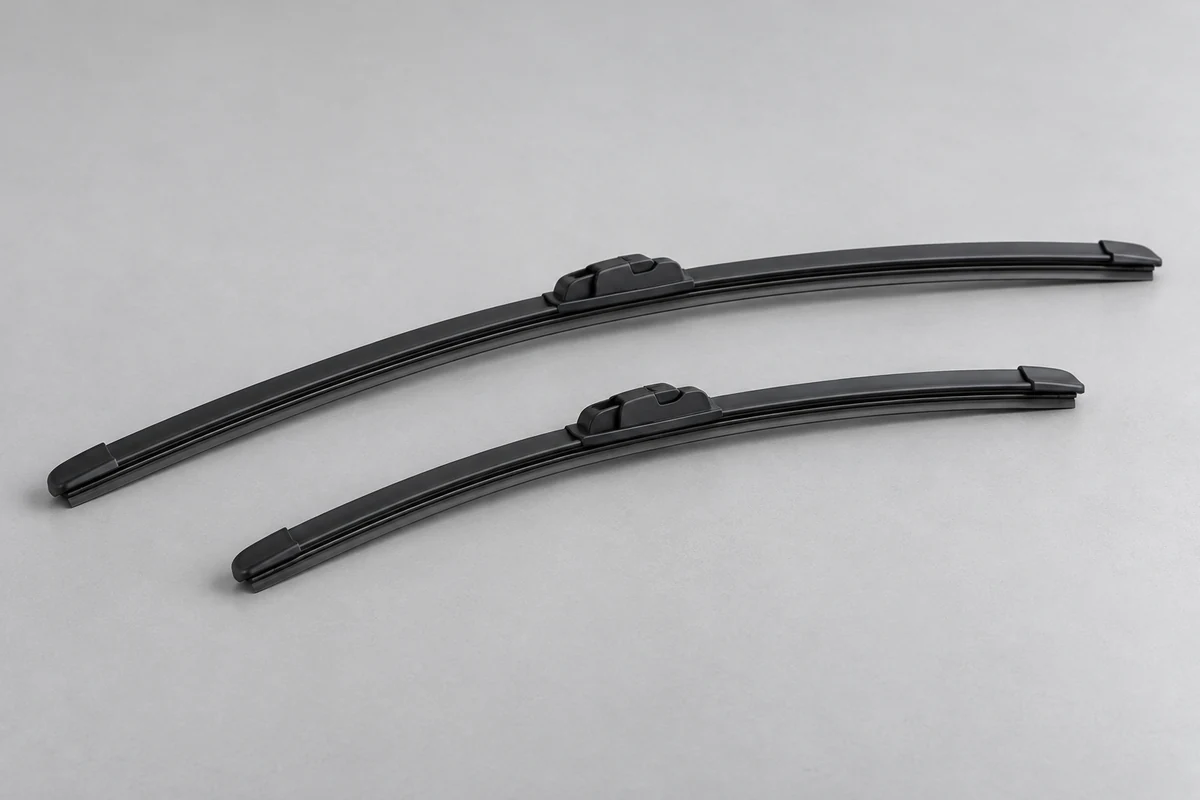
A store can run short of one approved wiper blade while accumulating its opposite-side partner. Repeating a balanced pair then restores the short line and enlarges an unrelated remainder. Replenishment should start from the actual issue history and pending authorized requirements for each side and equipment variant.
This decision assumes that the required blades and replacement scope have already been approved. It does not advise replacing only one blade on a vehicle. A service requirement for both sides remains a two-side requirement even if one side happens to be plentiful in stores.
Preserve side and equipment identity in the history
Lucid's Air wiper listing separates type and side, limits its heated offering to the stated Comfort and Convenience Package application, and says blades are sold individually. Checked on 14 October 2026, the page illustrates a side-specific selling unit. It does not establish another vehicle's options or another supplier's pack format. Lucid Air wiper blades
Use the actual approved vehicle and market reference when reading driver/passenger or left/right descriptions. Keep heated and nonheated variants separate. A generic issue entry called “wiper set” may need reconciliation against the original picked SKU before it becomes evidence for next month's order.
Separate a real consumption imbalance from a coding imbalance. If the system recorded every pair as two driver-side blades, its apparent shortage is not a demand trend. Ask for the supporting issues and corrections before setting the replenishment split.
Derive the shortage without changing service scope
List pending approved jobs by required side and variant, then apply matching eligible stock once. When one job needs both sides, retain that paired obligation but allow its two inventory lines to be covered from their respective bins. The procurement requirement can be one side only where existing stock already covers the other side of that same approved job.
Do not transfer surplus between heated and nonheated rows or use equal blade length as a substitution rule. Unsupported stock remains outside confirmed coverage. If a responsible product owner authorizes a different reference, record that decision separately before recalculating.
Use a side-imbalance worksheet
| Field | What to retain |
|---|---|
| Approved blade | Exact application and product reference |
| Side | Original controlled side terminology |
| Heating variant | Accepted equipment configuration |
| Pieces issued | Corrected history by SKU and issue unit |
| Eligible pieces | Matching uncommitted stock for this demand |
| Order unit | Individual blade or fully itemized pair |
Add columns for the proposed purchase and remainder of each row. A pair price is meaningful only after its contents are assigned to those rows. Unneeded partners should remain visible rather than receiving an assumed resale or future-use credit.
Fictional example: six jobs do not require six new pairs
Assume six fictional authorized jobs each need one blade A and one blade B of an already approved heated configuration. There are two eligible A blades and six eligible B blades, all available for these jobs. The shortage is four A blades and no B blades. Neither designation identifies a real product.
An actual-format assumption for this example offers A singly or A/B together. Four singles cover the shortage with no B surplus. Four pairs also cover it but leave four B blades beyond the present requirement. This says nothing about which offer is cheaper: obtain complete current prices and delivery terms before deciding.
If the single offer is instead nonheated A, it does not cover the heated A shortage. Nor can a pair containing a different B variant be treated as four useful spare partners. Keep the exact offered composition attached to the comparison.
Suppose two of the six jobs are postponed outside the approved purchasing window. Reconcile their reservations and demand together before changing the buy. Do not remove both their reserved supply and their demand inconsistently, or assume postponed jobs have been canceled.
Approve the imbalance consciously
A buyer may knowingly choose a pair offer despite the surplus. The release should then state which blades cover current demand and which remain unallocated, with the commercial reason supported by the actual quote. An even pack ratio is a seller format, not evidence that consumption is even.
Keep the selected unit in the next receipt and issue records. Recording four pairs as four unspecified blades would recreate the problem, while recording individual issues accurately lets the next buyer distinguish genuine side demand from a data error.
Request the identified replenishment
See Body parts for category context. In an Autoparts sourcing request, identify the approved product and the unresolved replenishment question. The form accepts an 8–1200-character description or supported marketplace link, and up to five PNG, JPEG, WebP or GIF images, limited to 10 MiB each and 20 MiB total. Other technical files need a separately agreed, authorized exchange; the image field is not a PDF, CAD or ZIP portal.
Named manufacturer products are documentary examples, not branded supply offers, affiliation or evidence that another supplier can make or validate an alternative. Independent buying coordination and supplier negotiation do not establish fit, safety approval or guaranteed savings.
Frequently asked questions
Does an uneven reorder recommend changing only one wiper?
No. Replenishment follows an already authorized service scope. A job requiring both sides can be partly covered by existing stock, leaving only one side to purchase. The article does not decide which blades a vehicle needs replaced.
Can surplus nonheated blades cover a heated shortage?
Only an applicable, separate product approval could support a changed reference. Do not use stock abundance or blade length to create that approval. Keep side and heating configuration distinct in the shortage and offer records.
Is a pair automatically better value than individual blades?
No conclusion follows without actual comparable offers. Expand the pair into exact sides and variants, show the surplus beyond approved demand, and compare complete purchase terms. Do not assign invented future sales or savings to the extra side.
How should old wiper-set issue records be used?
Reconcile each relevant record with its actual picked products and unit definition. A set entry may conceal two different SKUs or a coding error. Preserve unresolved history rather than interpreting it as reliable side-specific consumption.
Sources
Discuss a sourcing request related to this article.Wiper Reorders: Plan for Uneven Side Demand