
Preserve lamp-pair package verification data
A pair box can carry information used in a manufacturer’s two-step verification process. Check what each recipient would retain before splitting or covering that packaging.
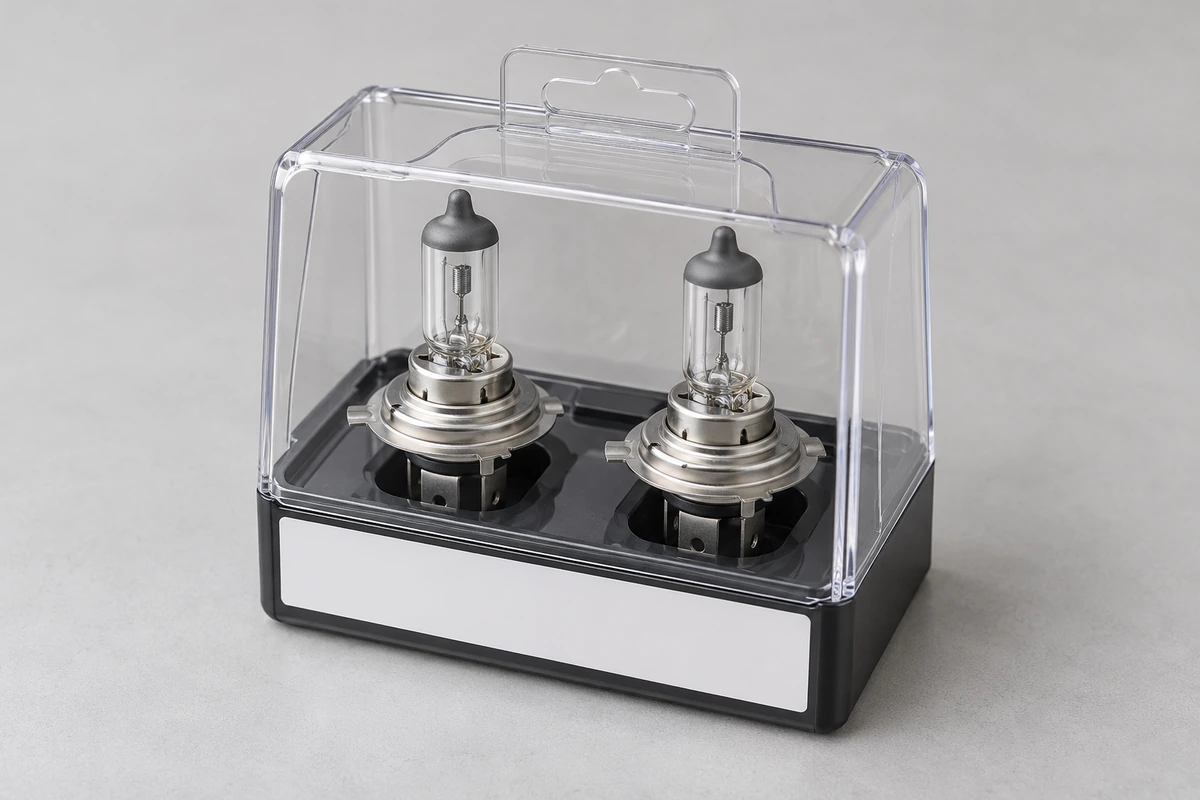
Before splitting a purchased lamp pair or approving an extra carton label, identify whether the original package participates in a manufacturer verification program. The verification data for a lamp pair can include both a packaging code and a separate comparison record. Keeping one visible barcode does not necessarily preserve the complete route for the recipient.
This packing review assumes the actual lamps and purchase scope have already been approved. It asks what happens to an existing verification relationship when a two-lamp pack is changed. It does not establish authenticity by appearance, select a road-legal lamp or authorize a lighting conversion.
Establish whether the actual family is covered
The OSRAM Trust Program, checked on 14 October 2026, describes a two-stage check for its stated xenon, LEDriving HL INTENSE and halogen DUO BOX products. The first stage uses a packaging label code; the second compares lamp data located on lamp bases for the described xenon/LED route or on the halogen DUO BOX. This is a named manufacturer program, not a general system for all automotive lamps.
Ask the actual provider which covered family and package format applies, and retain the relevant current program reference. An unbranded alternative cannot acquire coverage by carrying a similar-looking code. If the actual offer has no such program, record that fact and use its own agreed evidence requirements rather than inventing a manufacturer check.
The program example is not an offer to supply OSRAM products. Its applicability to the exact purchased goods, market and delivered packaging must be confirmed separately; the cited page alone does not settle those order-specific facts.
Follow both sides of the comparison
For an applicable pair pack, describe the original box-to-lamp association. Identify where the first-stage code belongs and where the separate comparison information belongs under that product family’s route. The point is to preserve the existing relationship, not to reproduce or assign new manufacturer identifiers.
Review the proposed change against both locations. A new shipping label may leave a retail barcode visible while obscuring the program’s data. Removing a box could discard information even though the lamps remain individually identified. Conversely, changing an outer carton may leave the relevant original pack undisturbed. The provider should explain which case the proposal represents.
Do not ask an ordinary packing team to reveal concealed markings for photographs. Request attributable existing records and a provider-approved evidence route that respects the product’s supplied condition. A buying article should not become a lamp handling or package-opening procedure.
Splitting the pair creates a recipient question
An intact pair may be destined for one recipient, while a proposal sends one lamp to each of two recipients. That changes who will possess the original packaging information and which lamp each record describes. Ask what verification opportunity remains for each destination under the actual program.
A single successful check reported before the split does not automatically establish that both eventual recipients can carry out the agreed check afterward. Keep an earlier result, the packing proposal and recipient access as distinct entries. Equally, do not claim that every split necessarily invalidates a program; obtain its applicable requirements and the provider’s exact answer.
Use a recipient record containing the covered family, original pair/package reference, affected data location, proposed split or overlabel, destination and unresolved comparison step. State whether the evidence describes the original pair or the final proposed arrangement. Those are different states.
Fictional example: two labels lose the original relationship
Imagine a fictional covered halogen pair box proposed for division between two destinations. The packing plan replaces the original package with two plain cartons, each carrying a photocopy of a generic retail barcode. The provider says both cartons still show the product type. These facts are illustrative, not a reported customer case.
The type description does not answer whether either recipient retains the program-specific first-stage information and the relevant DUO-box comparison data. The buyer asks the provider to resolve that exact gap before accepting the split. Making the photocopy sharper would not establish the missing original association.
One possible revised proposal keeps the original pair together for one destination. Another might offer a manufacturer-supported supply format suitable for the intended separate recipients, if genuinely available. Neither option is promised here. The buyer must review the offered evidence and any commercial scope change rather than assume the packer can create an equivalent pair identity.
Keep the verification outcome bounded
Close the packing decision against the identified program and final recipient arrangement. A supplier’s statement that a code is readable is narrower than a completed check. A completed check is narrower than evidence of the lamp’s vehicle fit, market authorization, physical condition or performance.
Record which question the evidence answers and which remains open. This prevents a preserved code from becoming an unsupported approval claim, while also avoiding the opposite mistake of treating a harmless outer-carton change as proof that the original program relationship was lost.
Bring the actual proposal into the sourcing request
See Lighting parts for category context and the supplier-check guide for the earlier supplier review. The manufacturer example above does not establish affiliation, a branded-goods offer or another supplier’s capability. Independent aftermarket or unbranded proposals need their own attributable evidence.
An Autoparts sourcing request can identify the approved product and the specific packing change still awaiting an answer. The form accepts an 8–1200-character description and up to five PNG, JPEG, WebP or GIF images, at most 10 MiB each and 20 MiB total. It does not accept PDF, CAD or ZIP files; arrange other technical files through a separately agreed, authorized exchange. Buying coordination and supplier negotiation do not establish an owned factory or laboratory, specialist packing services or engineering approval.
Frequently asked questions
Can a copied barcode preserve lamp-pair verification after a split?
A generic retail barcode establishes neither the required program data nor its association with the actual lamps. Ask the provider how each recipient will retain the applicable two-stage comparison under the named program. Do not describe a copied code or an earlier result as independent authenticity proof.
Does every automotive lamp use the OSRAM Trust Program?
No. The cited program is limited to the product families and packaging routes that OSRAM describes. Verify current coverage for the actual offer. An unbranded lamp or an unrelated manufacturer’s product needs its own attributable evidence and cannot inherit that program through similar labels.
What should an overlabel proposal show?
It should identify the affected original packaging and explain whether both the program code and the applicable comparison information remain available in the final recipient arrangement. A photograph showing some barcode is insufficient when it does not establish which data is shown or which lamps it accompanies.
Does a completed manufacturer check establish road legality or vehicle fit?
No such conclusion follows from this packing review. Record the exact verification result and its scope separately from fit, destination requirements, condition and technical approval. Those questions need applicable product-specific evidence and the responsible reviewer’s decision; preserving the package data cannot answer them automatically.
Sources
Discuss a sourcing request related to this article.Preserve lamp-pair package verification data