
Custom trim clips: include buyer-funded tooling in the UK valuation enquiry
Disclose buyer-funded trim-clip tooling and its relationship to the goods price before comparing UK import costs or assuming a low invoice is the full basis.
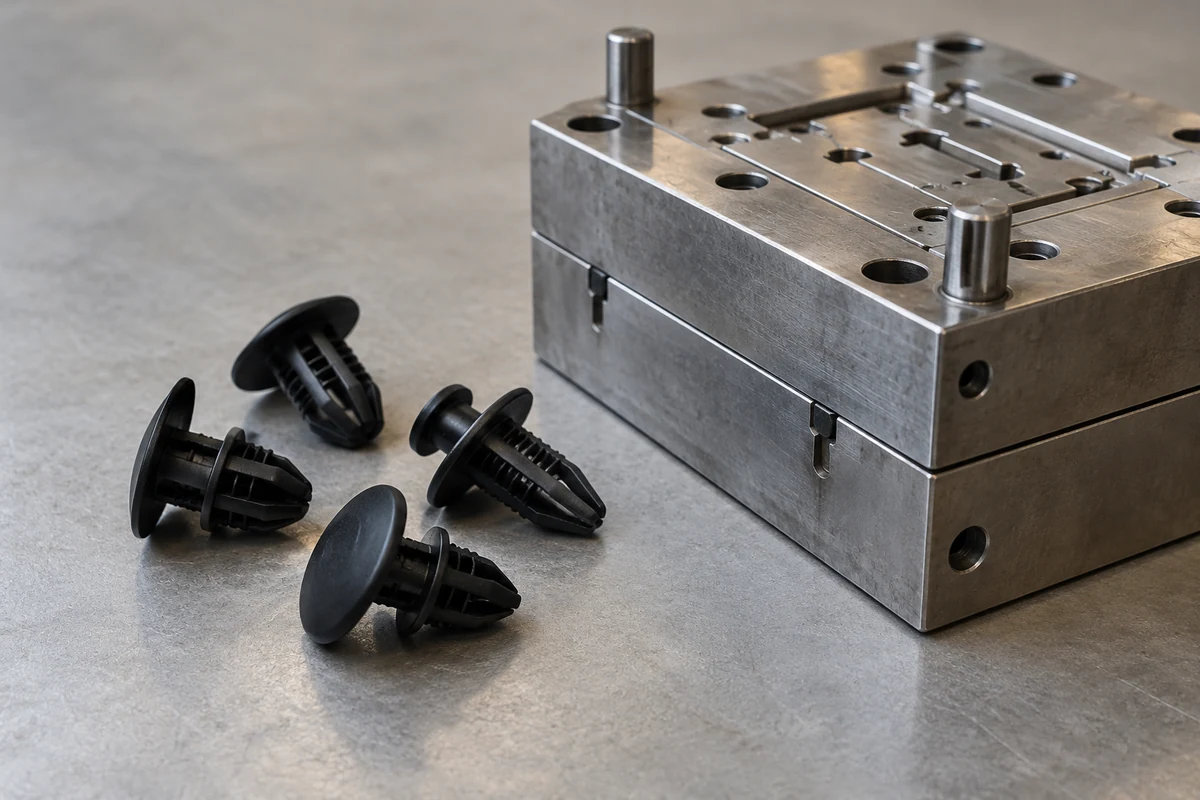
A custom trim-clip offer can show a low unit price because the buyer has funded the mould elsewhere. Before comparing UK landed costs, disclose that tooling arrangement to the customs adviser. The invoice for the clips may not contain every fact relevant to valuation.
The buyer's job is to trace the commercial arrangement accurately. This article does not calculate a customs value, choose an apportionment method or establish that a particular purchase qualifies for Method 1. It also does not approve a clip drawing, retention performance or supplier tooling capability.
Connect the mould agreement to the parts order
Identify the tool, owner, payer and supplier using the actual agreements. Record whether the buyer paid the parts seller, paid a separate toolmaker or provided an existing tool. Keep the mould reference connected to the clip references it produces rather than recording the payment as an unrelated project expense.
Ask the supplier whether the quoted goods price already includes any tooling recovery. Preserve the actual answer and pricing agreement. A separately paid invoice does not by itself tell the buyer what is embedded in later part prices, and an “included” response needs enough detail for the adviser to understand it.
Where the tool serves more than one order or product, provide that information too. Do not choose an allocation across all imagined future volumes merely to make the current shipment's estimate attractive. The relevant treatment needs an assessment of the actual arrangement and applicable valuation rules.
Put the omitted-cost question to the adviser
HMRC's Method 1 guidance addresses buyer-provided tools, dies and moulds used to produce imported goods, including cost or value not already in the seller's price, and notes that apportionment can vary. It also addresses relevant payments to the seller. These UK provisions require arrangement-specific assessment. HMRC Method 1 transaction-value guidance
Send the contracts, payment evidence and goods-price explanation to the responsible customs adviser through an authorized exchange. Ask whether and how the tooling affects this import's valuation, which facts support the answer and what records should be retained. Do not add the same cost twice or assume that omitting it from a goods invoice removes the question.
The commercial comparison and the customs valuation are related but different records. A buyer may track its whole tooling investment for project economics while the adviser establishes the appropriate treatment for a particular import. Keep the two purposes explicit so one worksheet does not silently substitute for the other.
Tooling-disclosure worksheet for trim clips
| Field | Record for the adviser |
|---|---|
| Tool owner | Actual agreement and mould identity |
| Payment arrangement | Payer, payee, evidence and stated purpose |
| Parts produced | Clip references and orders connected to the tool |
| Unit-price inclusion | Supplier explanation of any embedded tooling amount |
| Allocation question | Actual multi-order/product facts and unresolved points |
| Adviser answer | Applicable method, scope and retained evidence |
If one field is missing, say what is missing and who can supply it. Do not replace an unknown tool owner with the supplier's address or treat an internal accounting label as a customs determination.
Fictional comparison: cheaper clips, separate mould payment
Imagine two fictional offers against the same approved clip requirement. Offer A includes a tooling element in its quoted commercial arrangement. Offer B has a lower clip unit price but requires the buyer to fund a mould separately. No amounts, factory capabilities or actual customs outcomes are represented.
The buyer first compares the actual project commitments so the separate payment is visible. It then gives both arrangements to the customs adviser rather than applying the same assumed import-value basis to each goods invoice. The adviser may need further facts before returning an assessment; that gap stays open.
If B later says part of the tooling is also recovered through each unit price, preserve that clarification. Ask for the underlying commercial breakdown and return it to the adviser to avoid unsupported omission or duplication. Purchasing should not repair the ambiguity with a self-selected allocation.
Update the import estimate only from the assessed answer
Once the adviser provides an applicable determination, use that response to refresh the import-cost estimate and retain its limitations. Reopen it if the tooling funding, covered parts or pricing arrangement changes. A prior assessment for another destination is not automatically the UK answer.
The outcome sought is a disclosed, reviewable valuation enquiry. It leaves the commercial merits of custom tooling, product acceptance and the actual customs calculation with their respective decision owners.
The primary guidance cited here was checked on 14 October 2026. Recheck the applicable current rules and provider terms before committing to the actual shipment.
Keep the buying enquiry within scope
For product context, see Body parts. The Autoparts sourcing request can start an independent aftermarket or unbranded buying enquiry with a short description or supported product link. It accepts up to five PNG, JPEG, WebP or GIF images, at most 10 MiB each and 20 MiB total; descriptions are 8–1200 characters. Arrange other documents through a separately agreed, authorized exchange. The form is not a PDF, CAD or ZIP portal.
Supplier information and negotiation do not establish product suitability, specialist transport acceptance or customs approval. Keep those decisions with the responsible qualified parties. No freight service, branded-product offer or guaranteed outcome is implied here.
Frequently asked questions
Can a separately paid trim-clip mould affect UK customs valuation?
It can be relevant under the cited HMRC Method 1 guidance. Disclose the actual funding and pricing arrangement to the customs adviser rather than assuming the goods invoice alone answers the valuation question.
Should I add the full mould invoice to every shipment?
Do not invent an allocation or duplicate costs. Provide the tool’s actual use, payments and unit-price treatment, then ask the adviser for the applicable assessment and records.
What if the supplier says tooling is already in the clip price?
Request an attributable explanation of what the commercial price includes and preserve the agreement. Give that information to the adviser so any valuation treatment reflects the actual arrangement.
Does a customs-value answer approve the custom clip design?
No. Drawing authority, materials, retention evidence and supplier capability are separate purchasing and technical questions. A valuation assessment addresses its own defined import scope.
Sources
Discuss a sourcing request related to this article.Custom trim clips: include buyer-funded tooling in the UK valuation enquiry